
 Available in US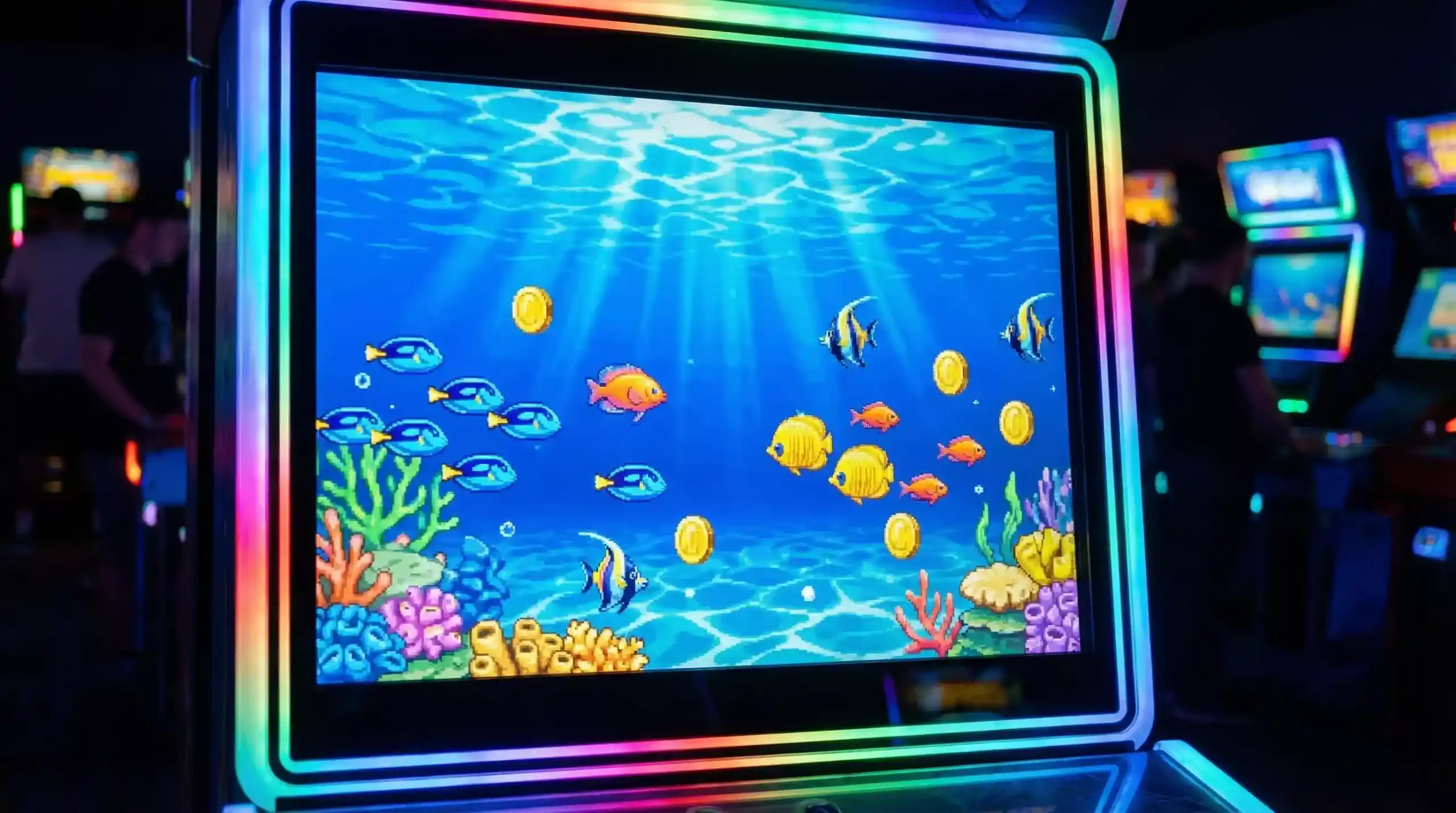
Fish games look like nothing else at sweepstakes casinos. While slots spin reels and table games deal cards, fish tables throw you into colorful underwater worlds where you shoot at swimming creatures for points. The genre traces back to Asian arcade halls, where skill-based fishing games generated dedicated followings decades before sweepstakes casinos adopted them. Now they’re among the fastest-growing categories in the space.
The gameplay differs fundamentally from luck-based games. You aim, you shoot, you decide which targets to pursue. The fish swimming across your screen vary in size, speed, and point value. Big fish pay more but require more ammunition to catch. Small fish fall quickly but contribute less to your haul. Managing this tradeoff—when to chase whales versus when to harvest minnows—creates engagement that passive slot spinning can’t match.
Fish games have become one of the fastest-growing categories in the sweepstakes segment, reflecting demand from players seeking alternatives to traditional casino formats. The games particularly resonate with players who grew up with arcade fishing games in Asian gaming halls, where the format originated in the early 2000s before spreading globally. If you’ve never tried fish table games, you’re missing one of the most distinctive offerings in sweepstakes gambling.
Sweepstakes Casino Fish Games — More on this topic at sweepstakes casino sign up bonus.
What Are Fish Games
Fish games put you in control of a weapon at the bottom of the screen, firing into an ocean populated by swimming targets. Each shot costs a certain number of coins. Each fish you catch awards points based on its species and size. The core loop involves spending currency on ammunition while hoping your catches exceed your expenditure. Simple concept, surprising depth in execution.
The underwater environments teem with movement. Schools of small fish drift across in predictable patterns. Medium creatures follow more complex paths. Boss characters—sharks, dragons, giant octopuses—appear periodically with massive point values but require sustained fire to defeat. Some games include power-ups and special weapons that affect entire areas at once, adding tactical layers beyond basic aiming.
Multiplayer functionality distinguishes fish tables from solitary slot play. Multiple players can occupy the same virtual ocean, competing for the same targets. When someone else shoots a fish you were tracking, that catch disappears. The competitive element creates urgency that single-player games lack. Real-time decisions against real opponents generate adrenaline differently than watching reels resolve.
Bet sizing works differently than at slots. You choose weapon power at the start of sessions, which affects both shot cost and damage output. Higher-power weapons take down big fish faster but burn through your balance quickly when shots miss. Lower-power setups preserve ammunition but struggle against valuable targets. The optimal choice depends on your bankroll, the specific game’s fish distribution, and your confidence in your aim.
Return rates in fish games carry even more uncertainty than sweepstakes slots. The skill component complicates theoretical RTP calculations—a perfect player extracts more value than a poor one. Published return percentages, where they exist, assume some baseline skill level that may not match your own. Experience at these games correlates more directly with results than at any luck-based format.
Visual presentation ranges from cartoonish to elaborately realistic. Some games lean into arcade aesthetics with bright colors and exaggerated animations. Others attempt photorealistic underwater environments with detailed fish models. The visual style doesn’t necessarily correlate with gameplay quality, but it affects how sessions feel. Find a presentation style that keeps you engaged during extended play.
Best Fish Game Casinos
Not every sweepstakes casino offers fish games, and among those that do, quality varies significantly. The genre requires different development expertise than slots, and platforms without dedicated fish game providers tend to offer substandard experiences. Knowing where to play matters more for fish games than for mainstream casino categories.
Orion Stars built its reputation on fish games before expanding into broader sweepstakes offerings. Their fishing selection remains the deepest in the industry, with multiple titles featuring different themes and mechanics. If you’re serious about fish games specifically, Orion Stars provides options that generalist platforms can’t match. The community around their fish tables includes experienced players who’ve developed sophisticated strategies over years of play.
Juwa combines fish games with a broad sweepstakes portfolio. Their fishing titles benefit from higher production values than some competitors, with smooth animations and responsive controls. The platform attracts fish game enthusiasts while also supporting players who want variety beyond a single genre. Transitioning between fishing sessions and slot play happens seamlessly within the same account.
Panda Master specializes in the Asian arcade style that defined the original fish game experience. Their titles feel closest to what you’d find in traditional fish game parlors. For players seeking authentic genre experiences rather than Westernized adaptations, Panda Master preserves the aesthetic and mechanical conventions that made these games popular initially.
Fire Kirin offers multiplayer fish tables with active player bases. Finding competitive games against real opponents happens more reliably here than at platforms where fish sections sit underutilized. If the PvP element attracts you—competing against other players rather than just the house—Fire Kirin delivers consistent matchmaking.
Mainstream sweepstakes casinos like Stake.us and WOW Vegas include fish games as secondary offerings. Their fishing titles work adequately but don’t receive the same development attention as slots. Players who primarily want fish games will find better specialized options. But if you’re exploring fish games casually while mainly playing other formats, the integrated options at major platforms provide convenient access without requiring additional accounts.
Mobile optimization matters particularly for fish games. The aiming mechanics translate well to touchscreens, and some players actually prefer mobile controls to desktop interfaces. Check that any platform you’re considering offers quality mobile fish game experiences if you plan to play on phones or tablets. Poor touch responsiveness ruins the skill-based gameplay that makes fish tables engaging.
Fish Game Strategies
Target selection drives fish game profitability more than any other factor. Big fish tempt with their point values, but the ammunition required to catch them can exceed their rewards. Small fish offer reliable catches but contribute minimally to your balance. The mathematical sweet spot usually involves medium-sized targets—fish that fall within a few shots while still paying meaningfully.
Shot efficiency compounds over sessions. Missing wastes ammunition. Hitting weak spots takes down fish faster. Understanding how each game’s targeting system works—whether shots track toward fish or travel in straight lines, whether there’s splash damage or strictly single-target hits—improves your conversion rate from shots fired to fish caught.
See also Sweepstakes Casino Responsible Gaming.
Boss events require strategic assessment. When a high-value target appears, the entire table often focuses fire on it. Your contribution might secure the catch, or it might waste ammunition while someone else lands the killing blow. In multiplayer environments, consider whether your bankroll can sustain the ammunition expenditure bosses require. Sometimes the smart play is ignoring the whale and harvesting distracted competitors’ neglected small fish.
Weapon power adjustments should match your bankroll and session goals. Starting with maximum power burns through coins quickly—sometimes before you’ve developed feel for a particular game’s patterns. Conservative openings let you observe how fish move and where high-value targets tend to spawn without risking significant capital. Escalate power once you understand the specific game you’re playing.
Pattern recognition separates consistent players from random shooters. Fish movements in most games follow predictable paths. Schools swim in formations. Certain fish spawn from specific screen locations. Observing these patterns helps you position shots more effectively. The learning curve is real—early sessions often feel chaotic, while experienced players perceive order in the apparent randomness.
Session timing affects results at multiplayer tables. Peak hours bring competition that can disrupt your strategies. Off-peak sessions sometimes mean fewer big fish spawns but also less competition for available targets. Experiment with different times to find when your playstyle works best against typical opponent densities.
Bankroll discipline applies even more strictly to fish games than luck-based formats. The active engagement can accelerate spending in ways passive slot play doesn’t. Setting ammunition budgets before sessions and stopping when you hit limits prevents the extended losses that fish games can produce when players chase big catches beyond their means.
Fish games occupy a unique niche in sweepstakes gambling. They’re not slots, they’re not table games, they’re something else entirely—arcade-style shooting games with real prize potential. The skill component creates genuine learning curves and meaningful improvement over time. Good players actually perform better than bad players, which most casino games can’t claim.
Finding the right platform matters more here than for mainstream game types. Specialized fish game casinos offer depth that generalist platforms lack. But if you’re curious rather than committed, the fish options at major sweepstakes sites provide legitimate introductions to the genre. Either way, fish tables deserve attention from players seeking engagement beyond passive spinning. Reel in the wins—once you develop the skill to do so consistently.