
 Available in US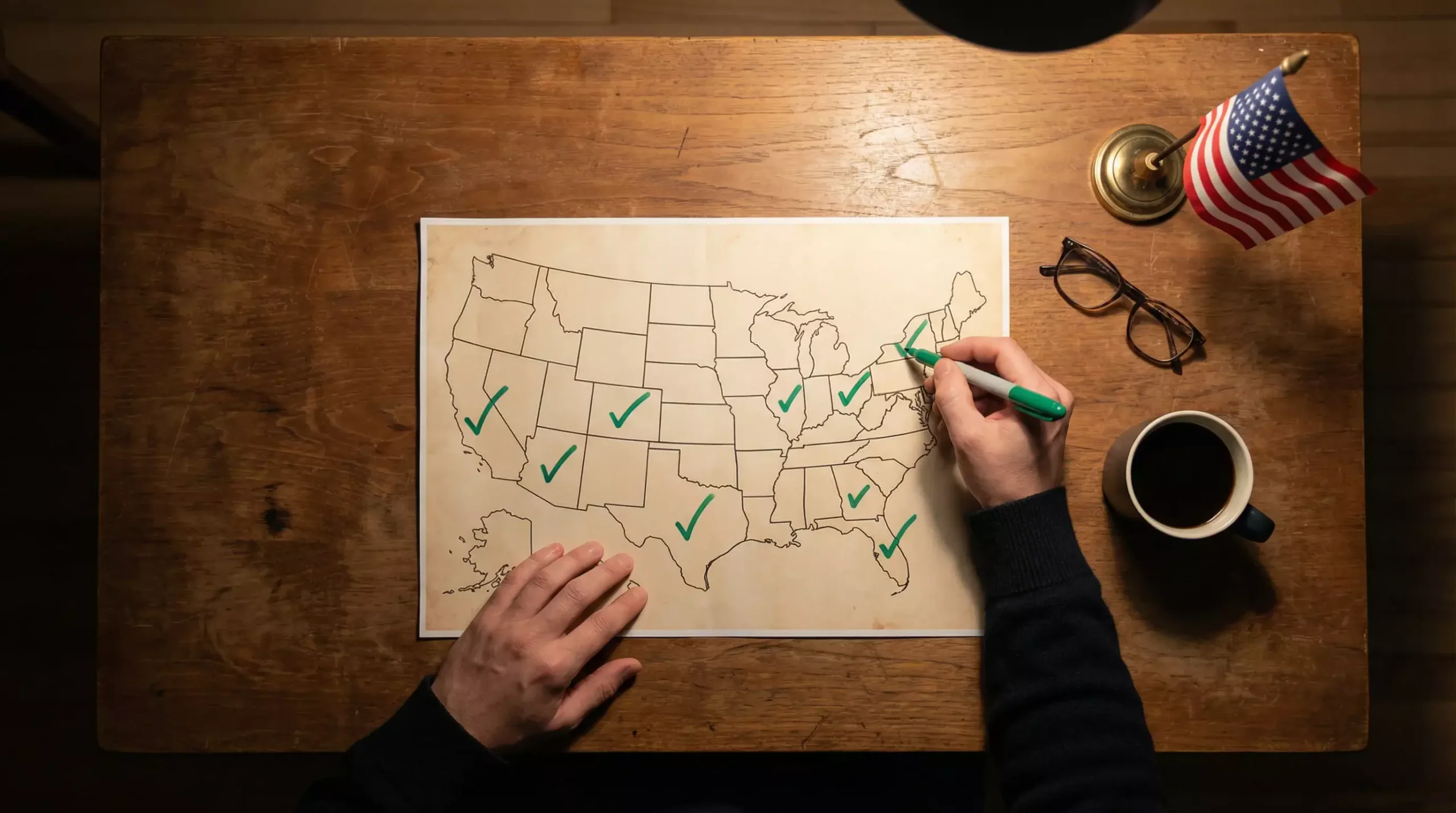
- Understanding Where Sweepstakes Casinos Actually Operate
- The Federal Legal Framework for Sweepstakes Gaming
- State-by-State Breakdown
- The Restricted States: Why Some Markets Stay Closed
- Recent Regulatory Actions Shaping the Industry
- How to Verify Sweepstakes Availability in Your State
- The Path Forward for Sweepstakes Legality
Understanding Where Sweepstakes Casinos Actually Operate
Sweepstakes casinos occupy a peculiar legal position in American gambling law. They operate across more than 35 states while licensed real-money online casinos remain restricted to just seven jurisdictions. This disparity exists because sweepstakes platforms structure themselves as promotional contests rather than gambling operations — a distinction that regulators, courts, and attorneys general continue debating with increasing intensity.
The geography of sweepstakes availability doesn’t follow obvious patterns. Washington explicitly bans the model. Michigan has taken enforcement action against specific operators. Idaho restricts access. Yet neighboring states with similar political orientations allow the same platforms without interference. Understanding these distinctions requires examining both the legal theories underlying sweepstakes gaming and the specific choices each state has made about enforcement.
Players looking to use sweepstakes casinos face a practical question that sounds simple but carries genuine complexity: can I legally play where I live? The answer involves state-specific regulations, platform-specific restrictions, and an evolving regulatory environment where today’s accessibility might change with the next attorney general opinion or legislative session. This guide maps the current landscape as of early 2026, explaining not just which states allow play but why these distinctions exist and how they might shift.
The stakes extend beyond individual player access. Sweepstakes operators generated billions in revenue during 2024, and that money flows without the gaming tax contributions that licensed casinos provide to state budgets. As regulators and legislators recognize this dynamic, pressure builds to either legitimize and tax the industry or shut it down entirely. Know your state means understanding where your jurisdiction stands in this ongoing negotiation.
The Federal Legal Framework for Sweepstakes Gaming
Sweepstakes casinos exist because of a loophole that predates the internet by decades. The legal foundation rests on a simple principle: promotional sweepstakes are not gambling if they eliminate the element of consideration. Prize, chance, consideration — remove one, and the activity falls outside most gambling statutes. Sweepstakes casinos remove consideration by offering free methods of entry alongside optional purchases.
The model traces back to legitimate promotional campaigns. Publishers Clearing House sent mailers promising million-dollar prizes with no purchase necessary. McDonald’s Monopoly let customers win through game pieces on food packaging while accepting mail-in requests for free entries. These promotions operated openly because they satisfied the legal requirement of free alternative entry. Sweepstakes casinos claim the same exemption, though critics argue the comparison strains credibility when applied to platforms that resemble online casinos in every functional detail.
Federal law provides no direct regulation of sweepstakes casinos. The Unlawful Internet Gambling Enforcement Act of 2006 targets payment processing for illegal gambling but doesn’t define gambling itself — that determination falls to state law. The Wire Act restricts interstate wagering on sports events, which doesn’t apply to slot-style games. No federal statute explicitly addresses whether sweepstakes models comply with or violate gambling prohibitions. This silence creates the regulatory vacuum in which the industry operates.
The Federal Trade Commission has authority over deceptive trade practices and has historically pursued sweepstakes scams that fail to deliver promised prizes. However, the FTC has not taken action specifically targeting sweepstakes casinos as a category. Individual consumer complaints might trigger investigation, but no comprehensive federal enforcement effort has emerged to challenge the industry’s fundamental legitimacy.
State gambling laws typically require three elements for an activity to qualify as illegal gambling: prize, chance, and consideration. The consideration element is where sweepstakes casinos focus their legal defense. By offering Gold Coins through free methods — mail-in requests, social media promotions, daily login bonuses — they argue that no purchase is necessary to participate. The Sweeps Coins that accompany purchases technically constitute free promotional bonuses rather than purchased gambling tokens, or so the legal theory maintains.
Legal scholars remain divided on whether this structure genuinely satisfies the no-consideration requirement. Some argue that the practical economics of sweepstakes casinos — where meaningful play typically requires purchases despite the existence of free alternatives — mirrors prohibited gambling more closely than legitimate promotional sweepstakes. Others maintain that the letter of the law supports the model as long as free entry genuinely exists. Courts in different jurisdictions have reached different conclusions, creating the patchwork of legal treatment that players must navigate.
The absence of federal guidance means that each state applies its own interpretation. A sweepstakes casino operating legally in one state might face prohibition in another based on subtle differences in statutory language or enforcement priorities. This jurisdictional fragmentation explains why platforms carefully geo-restrict access and why players in certain states find themselves blocked from registration.
State-by-State Breakdown
Sweepstakes casino availability falls into three broad categories: states where platforms operate freely, states with partial restrictions or recent regulatory attention, and states where access is blocked entirely. The map below this guide provides visual reference, but the nuances require detailed explanation.
States with Unrestricted Access
The majority of American states — roughly 38 as of early 2026 — allow sweepstakes casino operation without active interference. This doesn’t mean these states have explicitly legalized the model. Rather, it means regulators and attorneys general have not taken enforcement action against platforms serving their residents. The legal status remains ambiguous, but practical access exists.
Major population centers like Texas, Florida, California, and most of the Midwest fall into this category. Players in these states can register on major platforms, claim bonuses, play games, and redeem winnings without restriction. Processing times and payout methods function normally. The absence of regulatory action creates de facto acceptance, though operators remain aware that this tolerance could change.
States without existing online gambling frameworks often provide the smoothest access. When a state lacks established iGaming regulation, no existing regulatory body claims jurisdiction over sweepstakes casinos. This absence of authority translates to absence of interference. Players in these states experience sweepstakes casinos as fully functional entertainment platforms.
The Southern states — Georgia, Alabama, Tennessee, Louisiana, Arkansas, and Mississippi — allow sweepstakes casino access despite generally conservative attitudes toward gambling expansion. Georgia has witnessed class-action litigation against operators but continues permitting player access. Tennessee prohibits most gambling forms yet doesn’t actively restrict sweepstakes platforms. This pattern reflects the gap between statutory gambling prohibitions and actual enforcement priorities.
Midwestern states including Ohio, Indiana, Missouri, Wisconsin, and Minnesota similarly provide unrestricted access. Some of these states have expanded legal gambling through casinos and sports betting in recent years, creating regulatory infrastructure that theoretically could address sweepstakes platforms but hasn’t been applied in that direction. Players across the Midwest register and play without geographic restrictions.
Mountain West states — Colorado, Utah, Wyoming, and New Mexico — present varied access patterns. Colorado permits sweepstakes casino operation alongside its licensed sports betting market. Utah, despite being one of only two states without any legal gambling, doesn’t actively restrict sweepstakes platforms, though some operators voluntarily exclude Utah residents given the state’s anti-gambling culture. Wyoming and New Mexico provide standard access without notable restrictions or enforcement actions.
States with Licensed iGaming
New Jersey, Pennsylvania, Michigan, West Virginia, Connecticut, Delaware, and Rhode Island have legalized traditional online casino gambling. These states present complicated terrain for sweepstakes casinos. Licensed operators in these markets often view sweepstakes platforms as competitors operating without the regulatory costs and tax obligations that legitimate casinos bear. This creates political pressure for enforcement.
Michigan has moved most aggressively, with the Gaming Control Board explicitly warning residents against using certain sweepstakes platforms. The state treats some sweepstakes casinos as illegal gambling, though enforcement has focused on public statements rather than prosecution of individual players.
Other iGaming states take softer approaches. New Jersey regulators have expressed concern about sweepstakes casinos but have not pursued systematic enforcement. Pennsylvania has focused its gambling enforcement resources on unlicensed sports betting operations rather than sweepstakes platforms. The presence of legal alternatives doesn’t automatically mean restriction — it depends on each state’s enforcement priorities.
States with Complex Gambling Laws
Several states have gambling statutes that create uncertainty without clear resolution. Nevada, despite its gambling-friendly reputation, has complex provisions that some sweepstakes operators choose to avoid rather than test. Montana and South Dakota have unusual regulatory structures that platforms navigate cautiously.
Kentucky presents interesting developments following class action litigation against sweepstakes operators. While these lawsuits don’t prevent platform access, they signal a legal environment where sweepstakes casinos face heightened scrutiny. Players in Kentucky can typically still access platforms, but the litigation history suggests ongoing risk.
New York allows sweepstakes casino access but has emerged as a focal point for enforcement attention. The attorney general’s office has moved against multiple platforms, creating uncertainty about which operators will maintain New York access long-term. Players should check individual casino availability before assuming access.
States with Tribal Gaming Influence
States with significant tribal gaming operations often exhibit complex attitudes toward sweepstakes casinos. Tribal gaming compacts typically restrict competition that might reduce revenue to tribal casinos, and tribes have occasionally advocated for sweepstakes casino restrictions.
Oklahoma, with its extensive tribal gaming network, provides sweepstakes casino access but has seen legislative discussions about potential restrictions. Arizona has similar dynamics — sweepstakes casinos operate, but tribal interests monitor the competitive landscape carefully. These states represent potential future restriction points if tribal advocacy intensifies.
California presents the most significant recent development given its massive market and powerful tribal gaming lobby. Governor Newsom signed AB-831 into law in October 2025, banning sweepstakes casinos effective January 1, 2026. This makes California the largest state to formally prohibit the sweepstakes model.
Southern States and Conservative Jurisdictions
Many southern states with historically conservative positions on gambling nonetheless permit sweepstakes casino access. Texas, despite its general gambling restrictions, allows sweepstakes platforms to operate. Georgia, Alabama, and South Carolina similarly permit access without explicit endorsement. The sweepstakes legal structure provides cover for platforms in states where traditional gambling expansion faces political opposition.
This pattern reflects the strategic value of the sweepstakes model. Politicians who oppose casino legalization can maintain that position while sweepstakes casinos operate through the promotional contest exemption. Regulatory inaction doesn’t require political endorsement — it simply reflects absence of enforcement priority. Players in these states benefit from the ambiguity even as that ambiguity carries inherent risk.
Religious and conservative advocacy groups have occasionally challenged sweepstakes casino operations in southern states, arguing that the promotional sweepstakes structure represents gambling regardless of legal technicalities. These challenges have not yet succeeded in restricting access, but they represent ongoing pressure that could eventually trigger regulatory response.
States Without Gambling Infrastructure
States lacking established gambling regulatory frameworks often provide the smoothest sweepstakes casino access. Without gaming commissions or substantial casino lobbies, these jurisdictions have little motivation to pursue enforcement against sweepstakes platforms. Utah maintains religious opposition to gambling but has not specifically targeted sweepstakes casinos. Hawaii prohibits gambling but lacks enforcement infrastructure focused on online sweepstakes models.
Many Midwestern and Southern states fall into this category. Missouri, Kansas, Nebraska, and similar jurisdictions provide unrestricted access not because they’ve explicitly approved sweepstakes casinos but because they’ve simply not addressed the question. This regulatory silence creates de facto accessibility that players can enjoy while remaining aware that formal consideration of the issue could change their status.
The Restricted States: Why Some Markets Stay Closed
Three states maintain clear restrictions that block sweepstakes casino access entirely: Washington, Idaho, and to a lesser extent, Nevada. Understanding why these states differ from the majority illuminates the legal and political factors that determine sweepstakes casino availability.
Washington State
Washington represents the most definitive restriction in the country. State law defines gambling broadly enough to encompass sweepstakes casino models, and enforcement has matched this interpretation. The Washington State Gambling Commission has explicitly warned residents that sweepstakes casinos violate state law, and platforms have responded by blocking access from Washington IP addresses.
The legal foundation involves Washington’s treatment of consideration in gambling definitions. Unlike states where the no-purchase-necessary requirement satisfies consideration elements, Washington courts have interpreted the statute to focus on the overall commercial context rather than the technical availability of free entry. If a platform primarily operates as a gambling business, the existence of free alternatives doesn’t cure the underlying violation.
Historical context matters. Washington saw significant litigation involving social casino games that predated the current sweepstakes casino model. The DoubleDown Interactive settlement — totaling $415 million in 2023 — established precedent for treating casino-style social games as potential gambling even when they don’t offer real-money prizes. Sweepstakes casinos, which do offer redeemable value, face even clearer legal exposure under this framework.
Players in Washington who attempt to access sweepstakes casinos typically encounter registration blocks, geolocation checks that prevent play, or terms of service that explicitly exclude Washington residents. Some players attempt to circumvent these restrictions through VPNs, but doing so violates both platform terms and potentially state law. The risk of account closure and forfeited winnings makes such circumvention inadvisable.
Idaho
Idaho maintains strict gambling prohibitions that extend to sweepstakes casinos. The state constitution prohibits gambling with limited exceptions for the state lottery and parimutuel horse racing. This constitutional basis makes Idaho restrictions particularly durable — changing them would require constitutional amendment rather than simple legislation.
The Idaho Attorney General has not issued formal guidance specifically addressing sweepstakes casinos, but the broad language of state prohibitions leads most platforms to exclude Idaho residents preemptively. The risk of operating in a state with constitutional gambling prohibition outweighs the revenue potential from the state’s relatively small population.
Idaho’s religious and cultural conservatism reinforces legal restrictions. The state’s political climate makes expansion of gambling unlikely, and sweepstakes casinos face categorization alongside other forms of prohibited gambling regardless of their promotional sweepstakes structure.
Nevada
Nevada’s restriction seems paradoxical given the state’s gambling reputation, but it reflects regulatory sophistication rather than anti-gambling sentiment. The Nevada Gaming Commission maintains strict control over gambling operations within state borders, and sweepstakes casinos — which operate without Nevada licenses — represent unlicensed competition.
Nevada’s approach protects its licensed casino industry by restricting unregulated alternatives. Players can gamble extensively in Nevada casinos but face restrictions accessing sweepstakes platforms that haven’t obtained Nevada licensing. This creates the unusual situation where one of America’s most gambling-friendly states restricts a form of gaming that operates freely in less permissive jurisdictions.
Some sweepstakes operators have explored Nevada licensing, but the regulatory requirements and associated costs often exceed the revenue potential from the state’s population. Most platforms choose exclusion over compliance, accepting lost Nevada revenue to avoid regulatory complexity.
Michigan’s Emerging Restrictions
Michigan doesn’t fully restrict sweepstakes casinos but deserves mention for its increasingly hostile regulatory environment. The Michigan Gaming Control Board stated explicitly that gambling requires state licenses and that sweepstakes casinos operating without licenses violate state law. Executive Director Henry Williams declared that illegal gambling operations are not welcome in Michigan.
Enforcement has focused on public warnings rather than prosecution of players, but the state’s stance creates legal uncertainty that may intensify over time. Michigan’s established iGaming market gives regulators both incentive and framework for pursuing sweepstakes restrictions more aggressively.
Recent Regulatory Actions Shaping the Industry
The sweepstakes casino industry faces escalating regulatory pressure from multiple directions. Actions taken during 2024 and 2025 signal an inflection point where officials can no longer dismiss the industry as a minor phenomenon requiring no response.
New York Attorney General Letitia James made the most significant move in June 2025, sending cease-and-desist letters to 26 sweepstakes casino operators. In her accompanying statement, James emphasized that sweepstakes casinos pose risks to consumers because they operate without state audits or regulatory oversight, leaving players with no assurance that games are fair or that the platforms can pay out winnings. The breadth of this action — targeting 26 platforms simultaneously — indicated coordinated enforcement rather than isolated response to individual complaints.
New Jersey’s legislative response took a different form but reflected similar concerns. Governor Murphy signed Assembly Bill 5447 into law in August 2025, with fines reaching $100,000 for initial violations and $250,000 for subsequent offenses. This legislative approach provides clearer enforcement authority than attorney general interpretation alone, establishing specific penalties that make New Jersey operations financially untenable for most platforms.
Litigation continues expanding beyond individual operator disputes. Gaming attorney Daniel Wallach has tracked the proliferation of federal lawsuits, noting that 27 federal lawsuits had been filed against sweepstakes operators by August 2025. These actions increasingly target not just casino operators but also payment processors, geolocation vendors, and even social media influencers who promote sweepstakes platforms. This expansion of liability creates pressure throughout the industry ecosystem, potentially disrupting operations even for platforms not directly sued.
Class action settlements have extracted substantial payments from operators. VGW settled Kentucky litigation for $11.75 million. Yellow Social Interactive, which operates Pulsz, paid nearly $5 million across separate Kentucky settlements. These amounts demonstrate that sweepstakes casino operations carry genuine financial risk from legal action, even in states without formal prohibition.
California’s AB-831, signed by Governor Newsom in October 2025, represents a comprehensive approach — banning both operators and the vendors who support them. The law takes effect January 1, 2026, making California the 17th state to take legal action against sweepstakes casinos. With California representing approximately 20% of the national sweepstakes market, this ban significantly reshapes the industry landscape.
How to Verify Sweepstakes Availability in Your State
Checking sweepstakes casino availability requires multiple verification steps. Platform marketing claims accessibility but may block specific states during registration. Terms of service contain explicit geographic restrictions that players should read before providing personal information. The simplest verification method involves attempting registration while noting any state-specific restrictions or geolocation blocks.
Each major sweepstakes casino maintains a list of excluded states within its terms of service or FAQ sections. Chumba Casino, for example, explicitly identifies Washington and Idaho as unavailable. Stake.us lists restricted jurisdictions on its website before registration begins. Reading these disclosures prevents wasted time and ensures players understand their legal position before creating accounts.
State attorney general websites occasionally provide guidance on sweepstakes casino legality. The New York Attorney General’s office, following its June 2025 actions, published consumer warnings about sweepstakes platforms. The Michigan Gaming Control Board website contains statements about unlicensed gambling operations. These official sources provide more authoritative guidance than platform marketing materials.
Players should also monitor travel implications. Accessing a sweepstakes casino account from a restricted state — even while traveling — may violate terms of service or state law. Most platforms use geolocation verification that can detect VPN usage and may suspend accounts that appear to originate from prohibited locations. Understanding these restrictions before travel prevents unexpected access issues or account complications.
The Path Forward for Sweepstakes Legality
The sweepstakes casino industry operates in a period of fundamental uncertainty about its legal future. The model that enabled rapid growth — exploiting the gap between promotional sweepstakes exemptions and gambling regulation — faces challenges from multiple directions simultaneously. State attorneys general have grown more aggressive. Class action attorneys have found receptive courts. Legislators have begun proposing frameworks that would require licensing or impose outright prohibition.
Players should approach sweepstakes casinos with realistic expectations about this uncertainty. Platforms accessible today may face restrictions tomorrow. Legal positions that seemed settled can shift with a single court ruling or attorney general opinion. The industry’s current accessibility reflects regulatory delay more than affirmative legal approval. States have tolerated sweepstakes casinos; few have explicitly embraced them.
For residents of unrestricted states, sweepstakes casinos offer genuine entertainment value within these limitations. The platforms provide casino-style games with real redemption potential in jurisdictions where licensed alternatives don’t exist. Understanding the legal landscape — including its fragility — allows informed participation rather than naive assumption that current conditions will persist indefinitely.
Know your state means more than checking whether registration succeeds. It means understanding how your state treats sweepstakes casinos legally, what regulatory actions have occurred or are pending, and whether accessible platforms face restrictions that might affect your continued use. With that knowledge, players can make informed decisions about which platforms deserve their participation and how much exposure to regulatory risk they’re willing to accept.